"Lower carbon"
Less emissions than the thing it replaced. Genuinely useful, and often the honest and only claim available — but it still adds carbon to the atmosphere, just less of it.
Ask: lower than what, measured how, over what boundary?
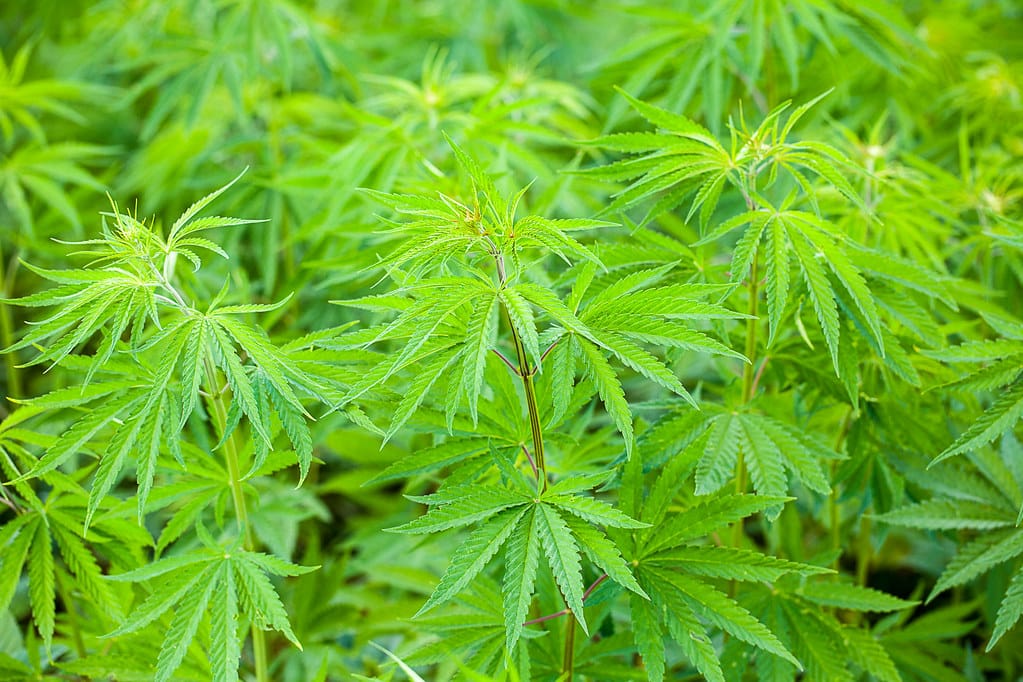
Carbon negative, carbon neutral, net zero, carbon positive, circular, recycled, compostable. Some of these are precise engineering terms and some are marketing. This section is about telling them apart.
Think of it as a ladder. Each rung is a stronger claim than the one above it, and each rung requires more evidence.
Less emissions than the thing it replaced. Genuinely useful, and often the honest and only claim available — but it still adds carbon to the atmosphere, just less of it.
Ask: lower than what, measured how, over what boundary?
Emissions were produced, then balanced out — usually by buying offsets or renewable energy credits. The atmosphere does not care about the accounting; this is a bookkeeping state, not a physical one.
Ask: are the offsets removal-based, permanent and verified — or avoided-emissions credits of uncertain additionality?
The product removed and stored more carbon than was emitted producing it. The net is below zero. This is a physical property of the material, and it is rare in construction — which is exactly why hemp-lime matters.
Ask: how much is stored, in what form, and for how long? What happens at end of life?
Almost all corporate climate claims rest on avoided emissions — a wind farm built, a forest not cut. Very few involve removal: carbon physically taken out of the air and stored. Carbon-negative materials are in the second, much rarer category.
Buildings are roughly 37% of global energy-related CO₂, and the materials are a huge slice of that. Change the material and you change the maths.
The same square metre of envelope, in five common assemblies. Cradle-to-gate embodied carbon only — the positive bars add carbon, the negative bar takes it out.
The hemp plant pulled CO₂ out of the air while growing, and the lime binder re-absorbs CO₂ as it carbonates. Both are storage; the manufacturing emissions are small by comparison.
Cement production releases CO₂ twice — once as fuel, once as a chemical product of turning limestone into clinker. That second release has no energy fix.
Check the functional unit, the life-cycle boundary and whether biogenic carbon is counted. Identical materials can produce wildly different charts.
Indicative cradle-to-gate figures compiled for this demonstration. Cradle-to-gate excludes transport, construction, maintenance and end of life; a full life-cycle assessment will move these numbers. Use it to understand the shape of the problem, not to certify a product.
Recycling is the second-to-last resort of the circular economy. It is the point at which you have already lost most of the value, energy and quality the product once had. A genuinely circular product is designed so that never has to happen.
The useful mental model is a ladder of strategies, ordered from best to worst. For any purchase, the higher up the ladder a product sits, the less material it ultimately consumes.
Refusing to buy it beats recycling it. Every time.
This is why a salvaged-timber beam scores so much better than a recycled-content concrete block: one is reused at full value, the other is downcycled into something lesser and will not be recycled again.
Our "circularity score" is a rough placement on this ladder, adjusted for durability and how easy the product is to keep in use. It is deliberately blunt — a comparison aid, not a certification.
Ask any of these of any supplier. Genuine ones answer quickly and specifically. Vague ones answer with a brochure.
Every environmental claim is a comparison. If the baseline is unstated, the claim is meaningless.
Cradle-to-gate, cradle-to-grave, or just your factory gate? Boundaries decide the answer.
Stopping an emission is not the same as taking carbon out of the air.
A product storing carbon for 5 years is a very different proposition to one storing it for 500.
Third-party, named, and with a report you can read — or self-declared?
Transport distance can quietly undo a low-carbon material advantage.
Landfill, compost, take-back, or genuinely recycled into something of equal value?
"Recycled packaging" says nothing about what is inside it.
9. Would this survive a lawsuit? Advertising regulators in the US, UK and EU have all acted against unqualified carbon-neutral and eco claims. If a claim is too vague to defend, it is probably too vague to believe.
The total greenhouse gas emissions associated with extracting, making, transporting, installing, maintaining and disposing of a material. In buildings, the embodied carbon of materials is separate from the operational carbon of heating and lighting the building.
Carbon that was recently in the atmosphere and was absorbed by a plant. Storing biogenic carbon in a long-lived product — a hemp-lime wall, a timber beam — delays or prevents its return to the atmosphere. Whether you are allowed to count it depends on the accounting standard, which is a frequent source of disagreement.
Embodied plus operational carbon, across the whole life of the building including demolition. The only figure that captures the full picture.
How well a product keeps materials in use at high value, across repeated cycles. Related to but distinct from recyclability: a product that lasts 30 years and is repairable is usually more circular than one that is recyclable but disposable.
A claim that overstates or misrepresents environmental performance, especially where the claim covers a small part of a product's impact while the bulk of it remains unchanged.
A biocomposite of hemp hurd, a lime-based binder and water, cast, sprayed or precast into building envelopes. Stores roughly 110 kg CO₂ equivalent per cubic metre, insulates, and regulates humidity. See the hempcrete hub.
We pick one confusing sustainability claim and take it apart properly.